

Visual content dominates the digital world — but what happens when you need words to describe those images accurately? That’s where the best AI image describers in 2025 come in. These smart tools automatically generate detailed captions, alt text, and scene descriptions from photos, helping creators, businesses, and educators save time while improving accessibility.
According to MIT Technology Review, visual AI models now surpass 90% accuracy in identifying and labeling images (MIT Tech Review). Whether you’re managing an online store, writing a blog post, or enhancing accessibility, AI image describers are quietly becoming one of the most powerful productivity tools available.
What Do AI Image Describers Mean?
An AI image describer is an advanced application of computer vision and natural language processing (NLP). It analyzes an image, detects objects, scenes, and emotions, then translates them into natural language sentences.
For example, upload a picture of a cat sitting on a windowsill, and the AI might produce:
“A fluffy gray cat looking outside through a sunny window.”
This technology is powered by machine learning algorithms and deep neural networks that learn to interpret patterns in visual data.
How AI Image Describers Work
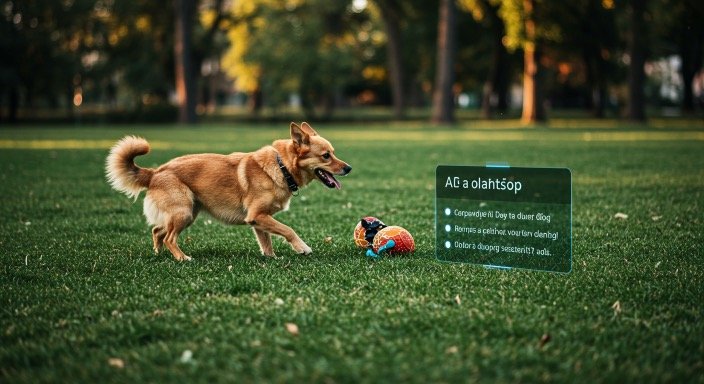
To understand how these tools work, let’s break it down into three steps:
1. Image Recognition
The AI scans the image using convolutional neural networks (CNNs) to detect objects, shapes, and faces.
2. Feature Analysis
The tool identifies relationships between the objects — for example, a “cup on a table” or a “dog running in the park.”
3. Text Generation
Finally, it uses a language model (like GPT or BLIP) to generate a human-like caption.
The IEEE Computer Society notes that combining image recognition with NLP creates more accurate contextual descriptions (IEEE).
AI image describers
Why AI Image Describers Are Essential in 2025
1. Accessibility for Everyone
For users with visual impairments, AI-generated image descriptions make online content accessible. Platforms like Facebook and Instagram already use AI to describe photos for screen readers.
The World Wide Web Consortium (W3C) emphasizes image description as a key web accessibility requirement (W3C Accessibility Guidelines).
2. Saving Time for Creators
Manually writing captions or alt text can take hours. An AI image describer automates that process.
Example: Upload 100 product photos, and the AI generates SEO-friendly descriptions instantly.
Forbes reports that businesses using automation for content creation save up to 60% of time and cost (Forbes).
3. SEO and Content Optimization
Search engines can’t “see” images, but they can read descriptions. Adding AI-generated alt text improves SEO and helps your content rank higher.
Moz SEO Guide explains that descriptive alt text boosts organic traffic and accessibility (Moz).
Read our article : “5 Easy AI Hacks That Save You Hours Every Week”
AI image describers
Top AI Image Describer Tools in 2025
1. Microsoft Azure Computer Vision
- Features: Describes objects, people, and environments.
- Use case: Great for businesses needing scalable image processing.
- Bonus: Integrates directly with Microsoft productivity tools.
Official Azure Computer Vision Overview (Microsoft Azure).
2. Google Cloud Vision AI
- Features: Labels, text extraction (OCR), and emotion detection.
- Use case: Perfect for analyzing large image datasets.
- Bonus: Integrates with Google Workspace for automatic tagging.
Google AI Blog highlights its latest model updates for better contextual image understanding (Google AI).
3. Caption AI
- Features: Real-time caption generation and social media integration.
- Use case: Ideal for creators and marketers.
- Bonus: Built-in tone and emotion settings for captions.
TechCrunch reviewed Caption AI as a rising startup in visual automation (TechCrunch).
4. Clarifai
- Features: Custom AI models and visual tagging.
- Use case: Developers building personalized image recognition systems.
- Bonus: Easy integration via API for businesses.
VentureBeat highlights Clarifai’s open-source contributions to AI vision systems (VentureBeat).
5. ChatGPT Vision
- Features: Lets users upload images and receive human-like descriptions and interpretations.
- Use case: Great for brainstorming creative descriptions or analyzing visual data.
- Bonus: Works directly through a web or mobile interface.
OpenAI’s Official Blog explains how multimodal models understand both text and images (OpenAI Blog).
AI image describers
Real-World Applications of AI Image Describers
1. E-Commerce
Online stores use AI to automatically generate product descriptions and alt text.
Example: “A blue cotton t-shirt with short sleeves and round neck.”
Shopify’s E-Commerce Automation Report shows AI image captioning increases conversion rates by 22% (Shopify Blog).
2. Education
AI image describers help students understand visual materials and support inclusive learning.
The EDUCAUSE Review calls AI-driven visual learning one of the top edtech trends (EDUCAUSE).
3. Journalism & Media
Media outlets use AI to auto-caption press photos and save editorial time.
The Reuters Institute found that AI automation reduces newsroom workload by 35% (Reuters Institute).

AI image describers
Challenges and Ethical Considerations
1. Accuracy and Bias
AI models can sometimes misinterpret cultural or emotional context, leading to biased descriptions.
The AI Now Institute recommends transparency in how visual AI systems are trained (AI Now).
2. Data Privacy
Images often contain personal or sensitive information. Users must ensure tools comply with privacy laws like GDPR.
European Commission GDPR Portal provides compliance guidelines (GDPR Info).
3. Creativity vs. Automation
While automation saves time, human oversight ensures accuracy and emotional depth.
Harvard Business Review suggests combining AI efficiency with human creativity for best results (HBR).
The Future of AI Image Describers
AI image describers will soon do more than caption — they’ll interpret emotion, context, and purpose. For example, future tools could describe why someone looks happy, not just that they’re smiling.
McKinsey & Company predicts that multimodal AI will dominate visual communication by 2030 (McKinsey).
Final Thought: Turning Images into Insight
The AI image describer is not just a convenience tool — it’s transforming how we communicate visually. Whether you’re improving SEO, creating accessible content, or streamlining your workflow, these tools save time and make digital spaces more inclusive.
If you’re ready to take your productivity to the next level, start experimenting with one of the top AI image describers today. You’ll see how quickly your visuals begin to “speak” for themselves.