

Getting started with AI productivity tools can feel overwhelming.
There are too many options.
Too many features.
Too many promises.
Most beginners don’t fail because the tools are bad. They fail because they start with tools that are too complex, poorly explained, or not designed for real-life workflows.
This simple guide is for beginners who want clarity — not hype.
You’ll learn what AI productivity tools actually do, which ones are beginner-friendly, how to choose the right tools, and how to use them without stress or technical knowledge.
Search Intent: Informational (Beginner-Focused)

This guide is designed for people who:
- Are new to AI productivity tools
- Want simple, practical explanations
- Need help choosing their first tools
- Care more about clarity than advanced features
What Are AI Productivity Tools (Beginner Explanation)
AI productivity tools are software tools that help you organize tasks, manage time, and make decisions more efficiently by offering smart suggestions and automation.
Instead of you doing everything manually, these tools help by:
- Organizing tasks
- Suggesting priorities
- Reducing repetitive work
- Supporting better planning
They don’t replace your thinking.
They reduce friction around your thinking.
Why Beginners Struggle With Productivity Tools
Many beginners quit productivity tools because:
- Tools feel complicated
- Setup takes too long
- Too many features appear at once
- The benefit isn’t clear immediately
AI productivity tools work best when:
- You start small
- You focus on one problem
- You choose tools designed for beginners
What Makes an AI Productivity Tool Beginner-Friendly?
Before we talk about tools, let’s define what “beginner-friendly” really means.
A good beginner AI productivity tool should:
- Be easy to understand
- Require minimal setup
- Offer helpful suggestions, not commands
- Work well without customization
- Feel supportive, not overwhelming
If a tool requires tutorials before you see value, it’s not beginner-friendly.
Best AI Productivity Tools for Beginners (Simple Breakdown)

Below are categories of beginner-friendly AI productivity tools, not hype-driven lists.
Task & To-Do Organization Tools
These tools help beginners manage tasks without micromanagement.
They are good for:
- Daily to-do lists
- Simple project tracking
- Reducing mental clutter
Beginner advantage:
- Tasks are grouped automatically
- Priorities are suggested
- You don’t need a complex system
Scheduling & Time Planning Tools
These tools help beginners plan realistically.
They are useful for:
- Scheduling work sessions
- Protecting focus time
- Avoiding overbooking
Beginner advantage:
- Less guesswork
- Fewer missed deadlines
- Clear daily structure
Notes & Information Organization Tools
These tools help beginners capture ideas without chaos.
They help with:
- Saving notes
- Summarizing information
- Organizing ideas logically
Beginner advantage:
- Notes stay connected
- Information is easier to find
- Less mental overload
Simple Automation & Workflow Tools
Automation tools remove repetitive actions.
They help beginners by:
- Reducing manual updates
- Connecting tools quietly in the background
- Saving time without complexity
Beginner advantage:
- Small wins add up
- No advanced configuration required
Check our section on How Freelancers Automate Their Work with AI
How Beginners Should Choose Their First AI Productivity Tool
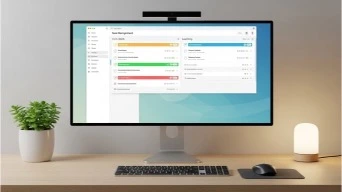
Step 1: Identify One Problem
Examples:
- Forgetting tasks
- Poor planning
- Feeling scattered
- Overthinking priorities
Step 2: Choose One Tool
One tool is enough to start.
Step 3: Use It Daily for One Week
No customization. No optimization. Just use it.
Step 4: Review What Helped
If it reduced friction, keep it.
If not, try another tool.
Common Beginner Mistakes to Avoid
Beginners often make these mistakes:
- Trying too many tools at once
- Expecting instant perfection
- Copying advanced setups
- Over-automating early
AI productivity tools support habits — they don’t replace them.
AI Productivity Tools vs Traditional Productivity Apps (Beginner View)
Traditional productivity apps rely on:
- Manual planning
- Manual updates
- Static task lists
AI productivity tools:
- Suggest priorities
- Adapt to workload
- Reduce repetitive steps
Traditional tools are fine for simple needs.
AI tools shine when things get busy.
Benefits Beginners Notice First
Most beginners notice benefits quickly when tools are chosen correctly.
Common early benefits:
- Less decision fatigue
- Clearer daily plans
- Reduced mental clutter
- More consistent follow-through
The biggest benefit is not speed.
It’s clarity.
Limitations Beginners Should Know About
AI productivity tools are not perfect.
Limitations include:
- Learning curves
- Setup time
- Over-reliance risk
They work best when:
- Used intentionally
- Kept simple
- Reviewed weekly
Short FAQ: AI Productivity Tools for Beginners
Are AI productivity tools hard to use?
No. Many are designed specifically for beginners.
Do beginners need paid tools?
Not at first. Many tools offer free plans that are enough to start.
Will AI productivity tools replace discipline?
No. They support consistency, not replace effort.
How long before beginners see results?
Usually within days if the tool fits the problem.
What is the easiest AI productivity tool to start with?
A simple task or planning tool with minimal setup.
Do beginners need multiple tools?
No. One well-chosen tool is enough.
Are these tools safe to use?
Yes, when used responsibly and intentionally.
Final Thoughts: Keep It Simple and Build Gradually
AI productivity tools work best when beginners:
- Start small
- Stay consistent
- Avoid complexity
You don’t need a perfect system.
You need a supportive one.
The goal is not to do more.
It’s to work with less friction and more clarity.
Our Authority Sources
Google Search Central documentation
According to Google’s official Search Central documentation, understanding how search engines crawl, index, and rank content is essential for building clear, helpful pages that are visible and useful to users.
Independent productivity research studies
Independent research from McKinsey highlights how digital tools and intelligent systems are reshaping productivity by reducing repetitive work and supporting better decision-making across modern workflows.
Workflow automation case studies
Real-world workflow automation case studies show that automating repetitive processes can significantly reduce manual effort, improve consistency, and save time across business operations.
APA-Boosting productivity
Workplace and time-management research indicates that reducing decision fatigue and improving task organization plays a key role in sustaining focus and long-term productivity.
SaaS productivity platform documentation
Official SaaS platform documentation demonstrates how modern cloud-based tools are designed to support productivity through task organization, automation, and intelligent workflows.